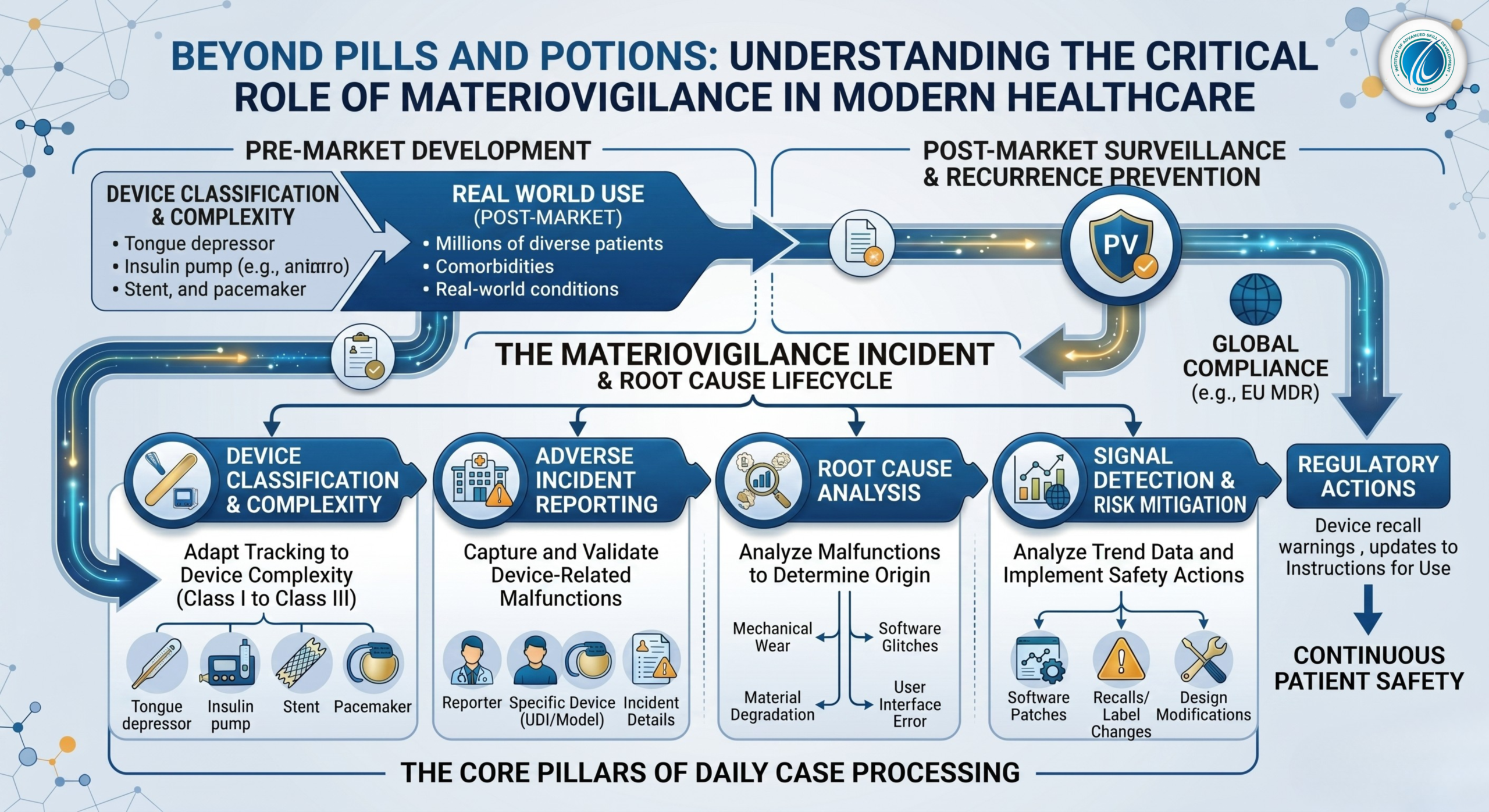
When we think of patient safety, we often think of tablets, vaccines, and intravenous fluids. But what about the insulin pump regulating a diabetic patient’s blood sugar, the coronary stent keeping an artery open, or even the advanced software running a hospital’s ventilators?
As medical technology evolves, ensuring the safety of these tools requires a specialized discipline: Materiovigilance.
Simply put, materiovigilance is the systematic surveillance of medical devices to ensure their safety and prevent recurrence of adverse incidents. Unlike drugs, which interact chemically with the human body, medical devices can fail due to mechanical wear, software glitches, material degradation, or user interface errors.
Why It Demands Specialized Attention
-
A Moving Target: Medical devices range from simple tongue depressors (Class I) to life-sustaining pacemakers (Class III). The safety tracking must adapt to the complexity of the machine.
-
Incidence Reporting: When a device malfunctions or leads to a deterioration in health, materiovigilance specialists analyze the root cause. Was it a manufacturing defect? A design flaw? Or vague instructions for use?
-
Global Compliance: With frameworks like the European Medical Device Regulation (EU MDR) setting incredibly high bars for tracking, companies must proactively monitor device performance throughout its market life.
Materiovigilance bridges the gap between engineering and healthcare, ensuring that the innovations designed to save lives never compromise patient safety.