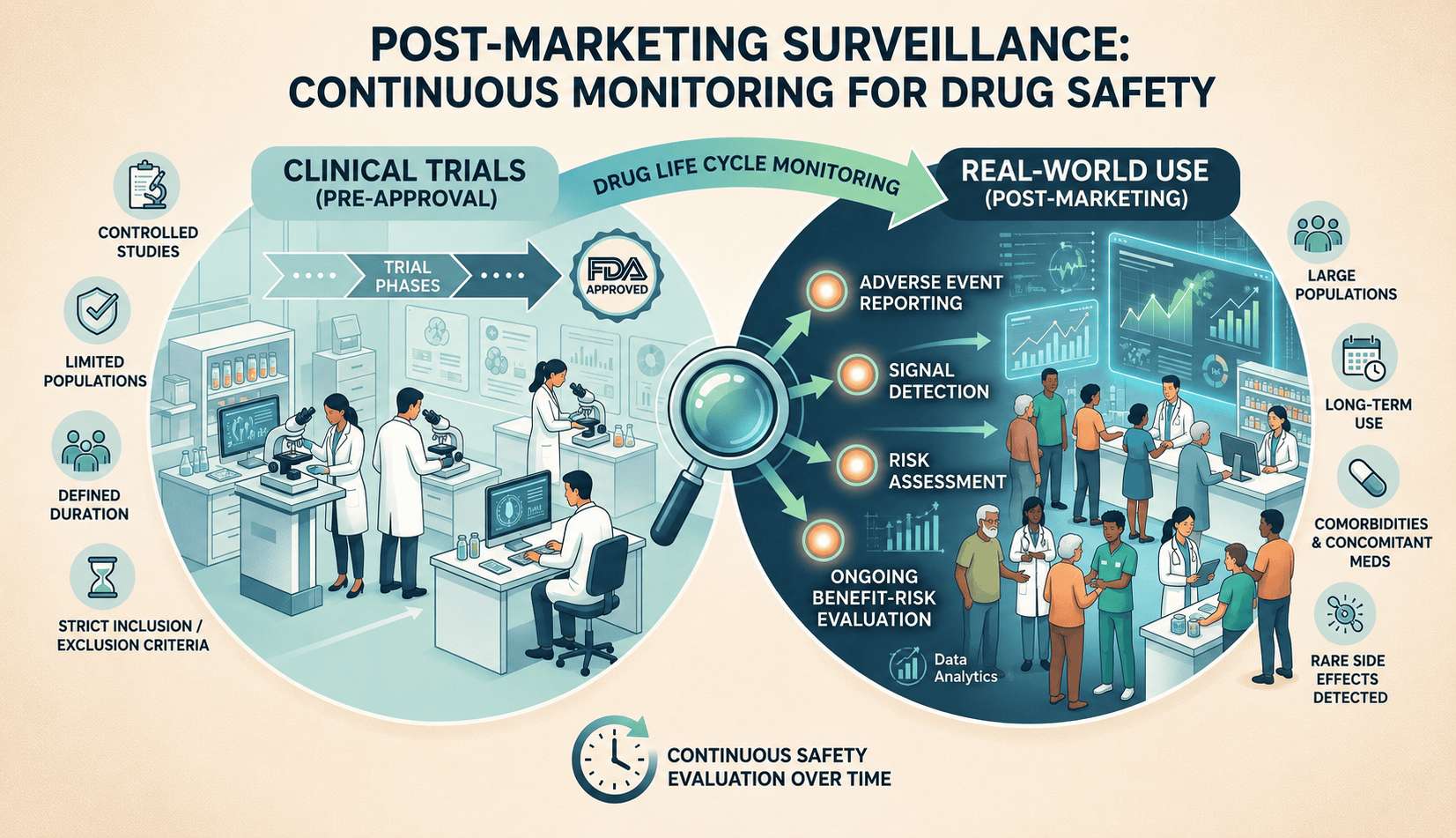
A medicine may appear safe during clinical trials, but its complete safety profile is often revealed only after widespread real-world use. This is why pharmacovigilance remains essential throughout a product’s lifecycle.
Clinical Trials: The Foundation of Drug Safety
- Controlled Environment: Clinical trials are conducted under carefully controlled conditions to evaluate a medicine’s safety and efficacy.
- Limited Patient Population: Only a relatively small number of selected participants are included, which may limit the detection of rare adverse events.
- Defined Study Duration: Most trials run for a specific period, making it difficult to identify long-term safety concerns
Real-World Use: The True Test
- Diverse Patient Populations: After approval, medicines are used by patients with different ages, medical conditions, and treatment histories.
- Long-Term Exposure: Safety issues that require months or years to develop may become visible only after marketing.
- Drug Interactions: Real-world patients often receive multiple medications, increasing the possibility of interaction-related adverse events.
Why Post-Marketing Surveillance Matters
- Detecting Rare Adverse Reactions: Some adverse events are too uncommon to be identified during clinical development.
- Identifying Safety Signals: Continuous monitoring helps detect emerging patterns that may indicate potential safety risks.
- Supporting Regulatory Decisions: Safety data collected after approval can lead to label updates, warnings, or risk minimization measures.
Key Perspective
Clinical trials answer:
“Is the medicine safe enough for approval?”
Post-marketing surveillance answers:
“Does the medicine remain safe in real-world use over time?”
Drug safety is not a one-time assessment. It is a continuous process that extends throughout the product lifecycle, ensuring that patient safety remains at the center of healthcare decision-making.