Introduction
Academic programs in pharmacy (B.Pharm/M.Pharm) and life sciences provide a strong foundational understanding of pharmacology, chemistry, and therapeutics. However, there remains a distinct operational gap between university curricula and the daily technical demands of corporate Pharmacovigilance (PV) operations.
While academic coursework focuses heavily on how drugs interact with physiological systems in textbook scenarios, industry PV centers on regulatory compliance, database navigation, and standardized medical terminology. Understanding these skill gaps early allows fresh graduates to targetedly prepare for corporate entry-level roles.
1. What Universities Teach vs. What Industry Requires
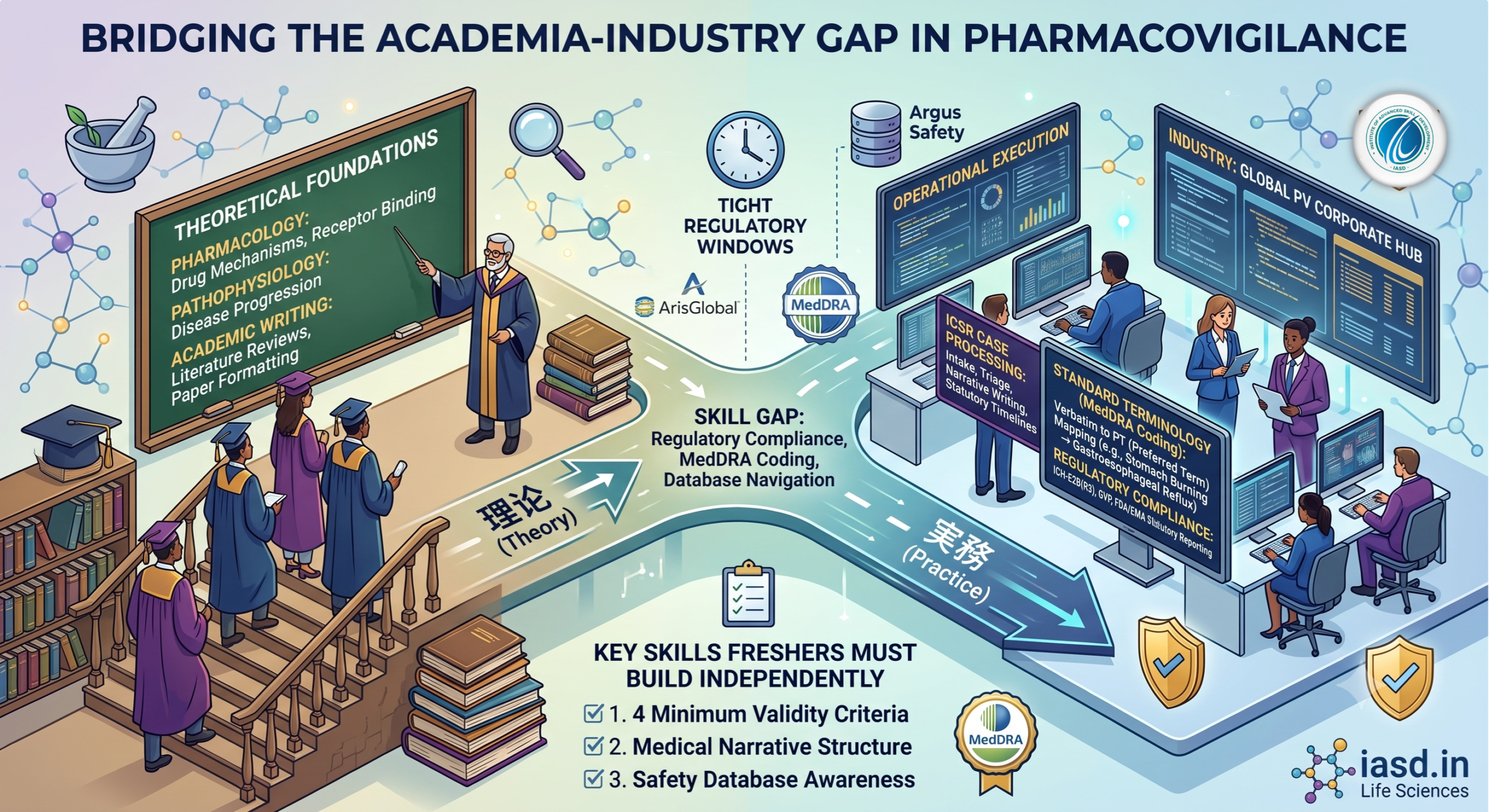
University Focus: The Theoretical Foundations
-
Pharmacology: Focuses on drug mechanisms of action, receptor binding, and side-effect profiles.
-
Pathophysiology: Explores disease progression and biological markers.
-
Academic Writing: Emphasizes literature reviews and academic research paper formatting.
Corporate PV Focus: Operational Execution
-
ICSR Case Processing: Intake, triage, data entry, and narrative writing for individual safety reports within tight regulatory windows.
-
Standardized Terminology (MedDRA Coding): Converting verbatim patient or physician complaints into standardized regulatory terms (e.g., mapping “stomach burning” to Gastroesophageal Reflux).
-
Regulatory Compliance Standards: Adhering strictly to ICH-E2B(R3) guidelines, GVP (Good Pharmacovigilance Practices), and FDA/EMA statutory reporting deadlines.
2. Key Skills Freshers Must Build Independently
To bridge this operational gap and stand out during technical interviews, students should focus on mastering three core competencies:
-
The 4 Minimum Validity Criteria: Every valid Individual Case Safety Report (ICSR) requires an identifiable reporter, an identifiable patient, a suspect medicinal product, and an adverse event.
-
Medical Narrative Structure: Learning how to write chronologically accurate, objective, and concise medical biographies using standard PV formats.
-
Safety Database Awareness: Familiarizing oneself with industry-standard safety database UI environments (such as Argus Safety or ArisGlobal) and how data fields are structured.