Introduction
Developing a new pharmaceutical molecule and bringing it safely to market is a rigorous, multi-year process governed by strict ethical and scientific standards. Clinical research operations are structured around four distinct phases, each designed to answer specific questions regarding safety, dosage, efficacy, and long-term population outcomes.
For clinical research associates, trial coordinators, and data managers, understanding the distinct operational focus of each phase is fundamental to trial execution.
1. Phase 1: First-in-Human Safety and Pharmacokinetics
-
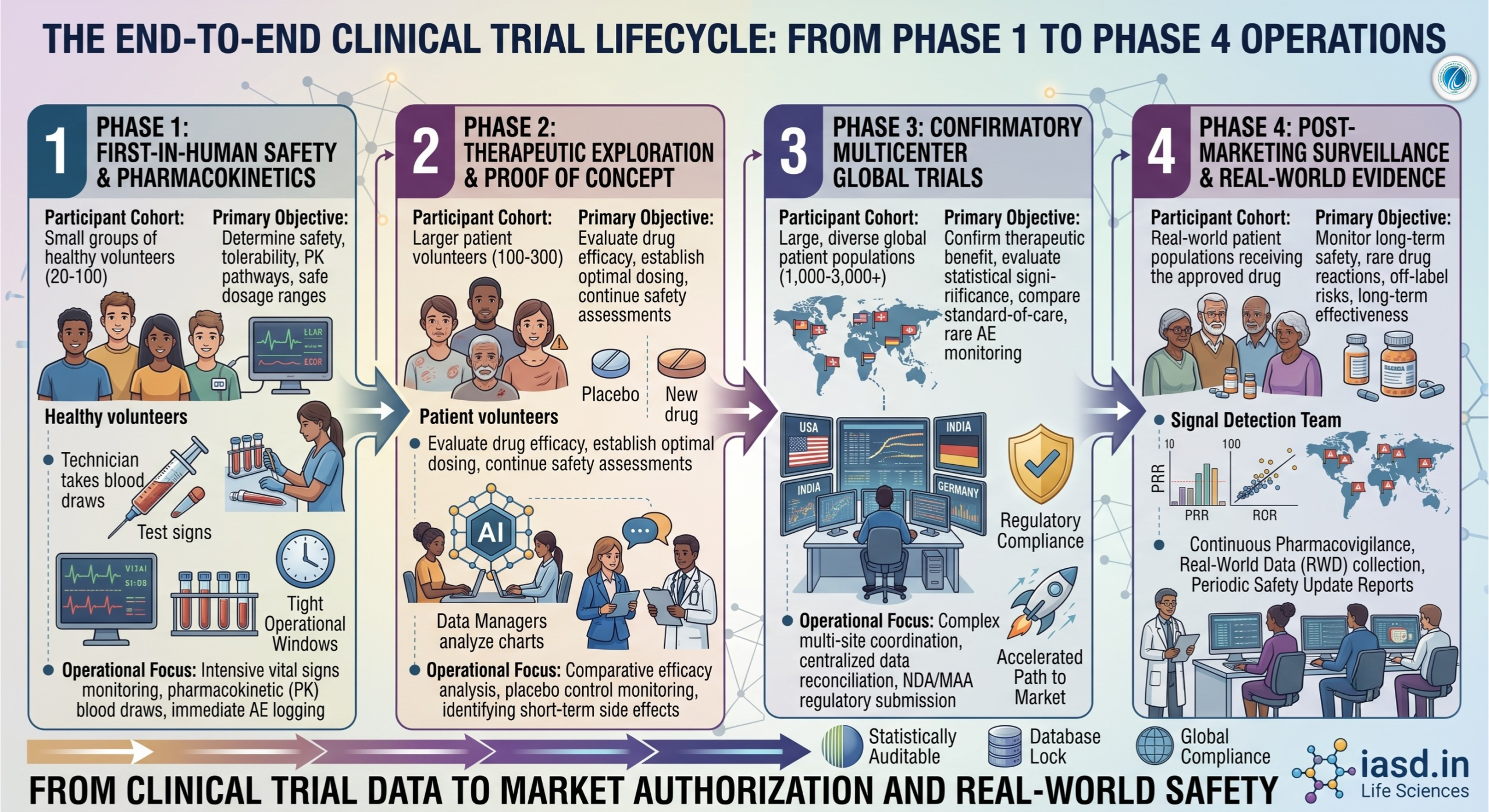
Participant Cohort: Small groups of healthy volunteers (typically 20 to 100 individuals).
-
Primary Objective: Determine safety, tolerability, metabolic pathways, and safe dosage ranges.
-
Operational Focus: Intensive monitoring of vital signs, pharmacokinetic (PK) blood draws, and immediate adverse event logging.
2. Phase 2: Therapeutic Exploration and Proof of Concept
-
Participant Cohort: Larger groups of patient volunteers affected by the target condition (100 to 300 patients).
-
Primary Objective: Evaluate drug efficacy for the specific disease while continuing safety assessments and establishing optimal dosing schedules.
-
Operational Focus: Comparative efficacy analysis, placebo control monitoring, and identifying common short-term side effects.
3. Phase 3: Confirmatory Multicenter Global Trials
-
Participant Cohort: Large, diverse patient populations (1,000 to 3,000+ patients across global sites).
-
Primary Objective: Confirm overall therapeutic benefit, evaluate statistical significance, monitor rare adverse reactions, and compare outcomes against current standard-of-care treatments.
-
Operational Focus: Complex multi-site trial coordination, centralized data reconciliation, and preparing data for regulatory submission (NDA/MAA).
4. Phase 4: Post-Marketing Surveillance and Real-World Evidence
-
Participant Cohort: Real-world patient populations receiving the approved prescription drug.
-
Primary Objective: Monitor long-term safety, rare adverse drug reactions, potential off-label use risks, and long-term therapeutic effectiveness in diverse demographics.
-
Operational Focus: Continuous pharmacovigilance, real-world data (RWD) collection, and mandatory periodic safety update reporting.