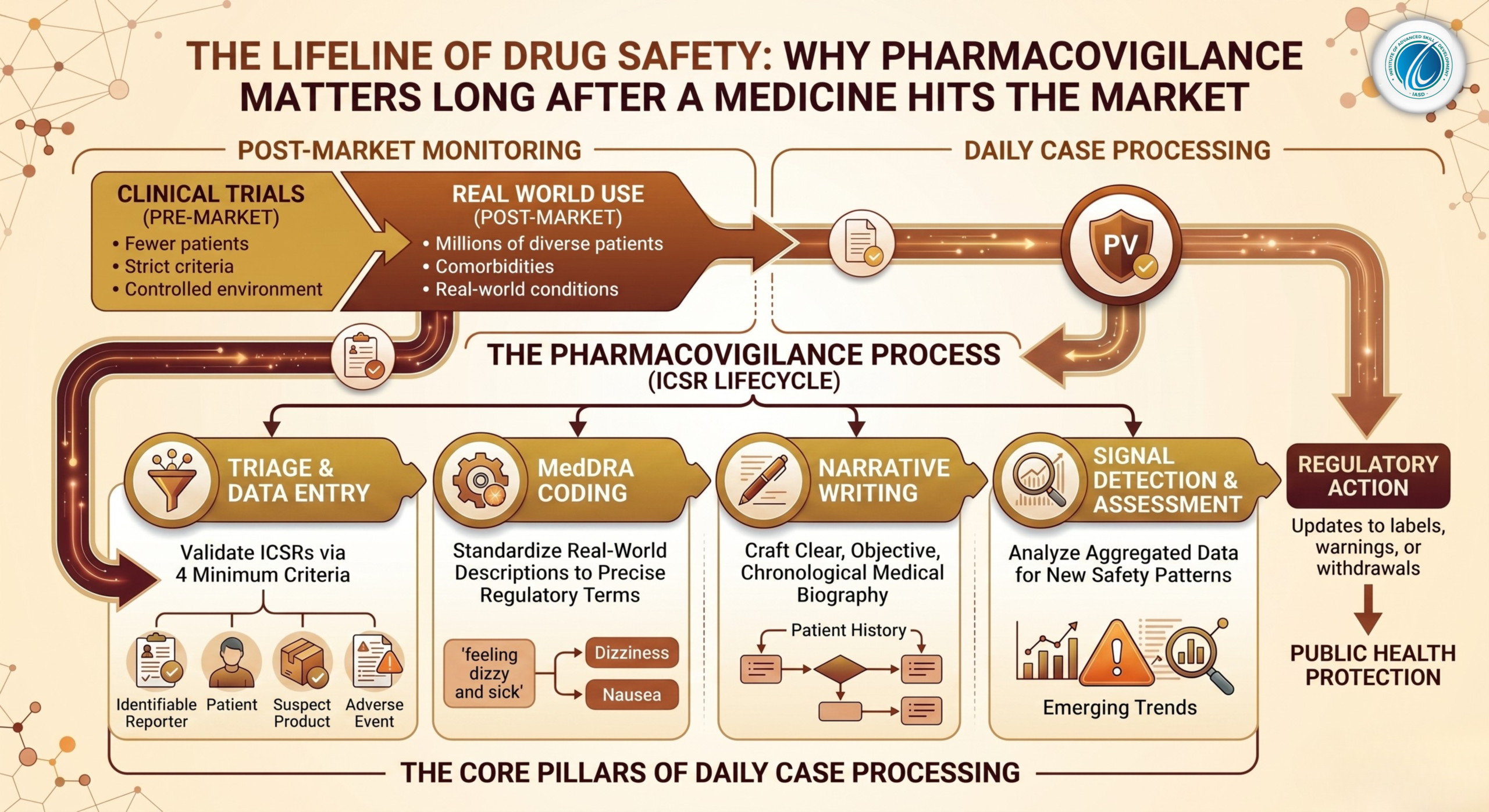
When a new medicine is approved by regulatory bodies, it feels like the finish line of a long marathon. However, in the world of life sciences, it is actually just the beginning. While clinical trials test drugs on thousands of selected patients, the real test begins when millions of people with diverse medical histories start using the medicine in the real world. This is where Pharmacovigilance (PV) steps in.
Pharmacovigilance is defined as the science and activities relating to the detection, assessment, understanding, and prevention of adverse effects or any other drug-related problems. It is the ultimate shield protecting public health.
The Core Pillars of Daily Case Processing
For professionals working within a drug safety database, the routine revolves around handling Individual Case Safety Reports (ICSRs). The workflow relies on accuracy at every step:
-
Triage & Data Entry: Identifying if a case has the four minimum criteria to be valid (an identifiable reporter, an identifiable patient, a suspect product, and an adverse event).
-
MedDRA Coding: Standardizing messy, real-world medical descriptions into highly precise, regulatory-approved terms using the Medical Dictionary for Regulatory Activities.
-
Narrative Writing: Crafting a clear, objective, and chronological medical biography of the patient’s experience so a regulatory reviewer can easily understand the case.
Without a robust PV system, delayed safety signals can lead to severe public health risks. By keeping databases meticulously organized, pharmacovigilance experts ensure that medicines remain safe, effective, and trusted worldwide.